
"coffee leaf management"
600 article(s) found
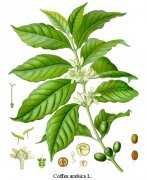
Coffee cultivation techniques detailed explanation of planting knowledge of Coffee trees
Coffee, cocoa and tea are called the three major beverages in the world, and their output, consumption and output value all rank first. In addition to being used as a beverage, coffee can also extract caffeine and coffee oil; in medicine, it can be used as an anesthetic, stimulant and diuretic cardiotonic agent. Coffee pulp can be used to make wine, vinegar, pectin and molasses; dried pulp can be used as animal feed; dried fruit shell can be used as fertilizer and burning

Maraka Dula Coffee, Fairview Manor, Nicaragua. What is Mara Kadura?
Professional coffee knowledge exchange more coffee bean information please follow Coffee Workshop (Wechat official account cafe_style) Fairview Manor is located on the outskirts of San Fernando, Nicaragua, carefully managed by the founder Roger Esau Herrera Ortez. The manor is located in the mountain area of 1400-1650 meters above sea level. the low temperature leads to the slow growth of coffee trees.

Coffee cultivation techniques
Coffee, cocoa and tea are called the three major beverages in the world, and their output, consumption and output value all rank first. In addition to being used as a beverage, coffee can also extract caffeine and coffee oil; in medicine, it can be used as an anesthetic, stimulant and diuretic cardiotonic agent.

Introduction to coffee growing technology
Field management loosening weeding: seedling height of 3~6 cm, thinning seedlings, weak seedlings or over-dense seedlings pulled out; seedling height of 10~13 cm when the seedlings, plant spacing of about 30 cm. At the same time of thinning and fixing seedlings, loosen the soil and weed, keep the soil loose. Coffee beans are more drought resistant, soil moisture can be maintained normal growth, dry days, appropriate watering, but in the seedling period for its squatting seedlings should be less

Indonesian Socridi Cooperative Coffee introduction what are the varieties of coffee grown in Indonesia
In Indonesia, 90 per cent of coffee belongs to Robusta, probably as a result of the devastating 19th-century coffee leaf rust. But in Toraja producing areas, 95% of coffee belongs to Arabica. The main coffee variety in Sulawesi Toraja area is S795 (also known as Jember), which belongs to the Arabica race and has a strong resistance to leaf rust.

Nicaraguan Coffee | Bull Manor-H1Variety Black Bull Flavor
Manor Manor-H1 Variety "Heimanniu" Manor: Las Promesas de San Blas area: Dipilto Variety: H1 altitude: 1250 m Refining method: sun treatment reference Flavor: what is the H1 variety of blueberry, plum, cherry and black jujube? H1 is a hybrid of Sarchimor Tmur5296 and Romi Sultan (Rume Sudan). Main characteristics: 1. Leaf resistance

El Salvador Santa Maria Coffee House
Finca La Reforma and Finca Santa Maria were founded by Rafael Alvarez Lalinde in 1892 on the fertile and wet slopes of Santa Ana volcano. Don Rafael immigrated from Colombia with some of the best coffee seeds.

Introduction of Katim Coffee beans
The characteristic editing was 3846 seeds per kilogram when exposed to cool sun for 2 months. There were about 5000 seeds in cool sun for 5 months, the germination rate was more than 95% in two months after seed production, 85% in three months, became weak after three months, and most seeds lost their germination rate after six months. The resistance to leaf rust is sub-immune type or extremely high resistance type, and its plant type is compact and mostly exposed in the branches.
Annual report of Honduran Coffee 2017
Highlight of the report: Honduras is the largest coffee producer in Central America and the third largest coffee producer in Latin America, ranking sixth in global coffee exports. Coffee production in Honduras from October 2017 to September 2018 is expected to reach 6.5 million bags, up 4 per cent from last year. For the 2016 / 2017 sales year, at the beginning of 2017, Loeb
Organ classification of coffee
Coffee is a shallow root crop, and the plants propagated with seeds have conical roots. Root system refers to the general name of root. The root morphological distribution and depth of shade varieties / soil conditions and agricultural technical measures are different. From the point of view of varieties, the roots of small / medium grain species are shallower, while those of large grain species are deeper. Under normal circumstances, there is a thick and short taproot and many well-developed lateral roots. Yunnan small-grain coffee has a 4-year-old fruit.
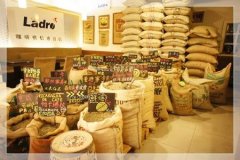
The cultivated varieties of Coffee Tree: small seed and large seed
3. Cultivated varieties (1) small seed species (2) large grain species Coffea belongs to Rubiaceae, Coffea belongs to perennial evergreen shrubs or small trees, there are about 90 species. At present, there are small seed species (Arabian species), medium grain species (Gaffra species) and large grain species (Liberian species) cultivated in Hainan. (1) small seed species: also known as Arabian species, native to Ethiopia, evergreen shrubs. The plant is small, 4cm high and 5m high

Organ Classification of Coffee Coffee belongs to shallow root crops
Coffee is a shallow root crop, and the plants propagated with seeds have conical roots. Root system refers to the general name of root. The root morphological distribution and depth of shade varieties / soil conditions and agricultural technical measures are different. From the point of view of varieties, the roots of small / medium grain species are shallower, while those of large grain species are deeper. Under normal circumstances, there is a thick and short taproot and many well-developed lateral roots. Yunnan small-grain coffee has a 4-year-old fruit.
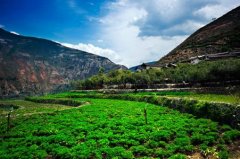
Cultivation techniques of Baoshan small-grain Coffee
I. the environmental conditions required by small-grain coffee originated in Ethiopia in north-central Africa, located in 69 N, 3440 E, 13001900m above sea level, with 16001900mm precipitation and an average annual temperature of 20 ℃. In the process of long-term evolution, coffee has specific requirements for environmental conditions due to the joint action of biology and climate.

Is it Robusta or Arabica? Coffee bean variety El Salvador Himalayan manor
Global coffee bean tree species are mainly divided into: Arabica and Canephora, of which Arabica coffee beans account for more than 100 coffee varieties of 70%80%coffee. The more common coffee varieties are: Arabica Arabica, with outstanding personality and unique flavor, is the main force of boutique coffee, mainly used in coffee shop management and high-end coffee market supply; Robsta

How to know Katim Coffee beans?
Follow the caf é (official Wechat account vdailycom) and found that Katim: small seed coffee, medium dwarf plant, exuberant growth, stable secondary characters, green crown buds, dark green leaves, columnar shape, short internodes, many branches, exuberant growth, wide adaptability, strong drought resistance, certain cold resistance, medium management.
Basic knowledge of high-quality coffee classification of various parts of coffee trees
1. Root coffee is a shallow root crop, and the plants propagated by seeds are conical roots. Root system refers to the general name of root. The root morphological distribution and depth of shade varieties / soil conditions and agricultural technical measures are different. From the point of view of varieties, the roots of small / medium grain species are shallower, while those of large grain species are deeper. Under normal circumstances, there is a thick and short taproot and many well-developed lateral roots. Yunnan small-grain coffee has been growing for 3-4 years.
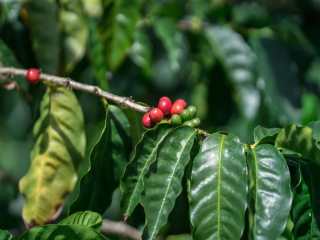
Flavor description of Yunnan Tieka Coffee beans introduction to the characteristics of varieties produced by taste treatment
Flavor description of Yunnan Ironpika Coffee beans Typica: the oldest native variety in Ethiopia and southeastern Sudan, all Arabica are derived from Tibica. Elegant flavor, but weak physique, poor disease resistance, fruit production

How to grow small grains of coffee in Baoshan, Yunnan? can we grow good coffee beans in China?
Professional coffee knowledge exchange more coffee bean information please pay attention to the coffee workshop (Wechat official account cafe_style) 1, the environmental conditions required by small Coffee Coffee is native to Ethiopia in north-central Africa, located in 69 N, 3440 E, 13001900m above sea level, precipitation 16001900mm, annual average temperature 20 ℃ lower layer of tropical rain forest. In the long-term process of evolution

Introduction to the varieties of Grinding scale for Coffee beans in Magic Manor, Colombia
Columbia Magic Manor Coffee Bean Flavor Regional Grinding scale Taste varieties introduce the varieties of Colombian coffee are mainly small-grain coffee. Plants are small trees or large shrubs, 5-8 m tall, usually much branched at base; old branches gray-white, nodes dilated, young branches glabrous, compressed. Leaves thinly leathery, ovate-lanceolate or lanceolate, 6-14 cm long, 3.5-5 cm wide, tip long acuminate

Coffee trees to prevent pests Coffee trees are easy to get leaf rust how to prevent oriental fruit flies
Professional coffee knowledge exchange more coffee bean information Please pay attention to the coffee workshop (Wechat official account cafe_style) the human body will inevitably get sick, and plants will also suffer from diseases and insect pests. Of course, coffee trees also have their diseases and insect pests. There are many coffee growers in Taiwan who often assure customers that Taiwan coffee is free from diseases and insect pests and is the safest food. Coffee is a very safe food.